
I have been a car and truck nerd and enjoyed camping and building things since I was a kid. My parents built me a little workshop in a closet at our house when I was in kindergarten, and I was always tinkering, building, and drawing up designs for all sorts of projects.
In college I studied engineering and learned to use 3D CAD software. I started to brainstorm and draw up plans for all sorts of campers that I wanted to build once I had a shop—vans, truck campers, sleeping platforms, just about everything. I also started to do more and more road trips. I think in one 12 month period I drove from Wisconsin to the Rockies 5 or 6 times to climb, bike, and backpack, on top of trips to the Red River Gorge and around the midwest.
The Beginning
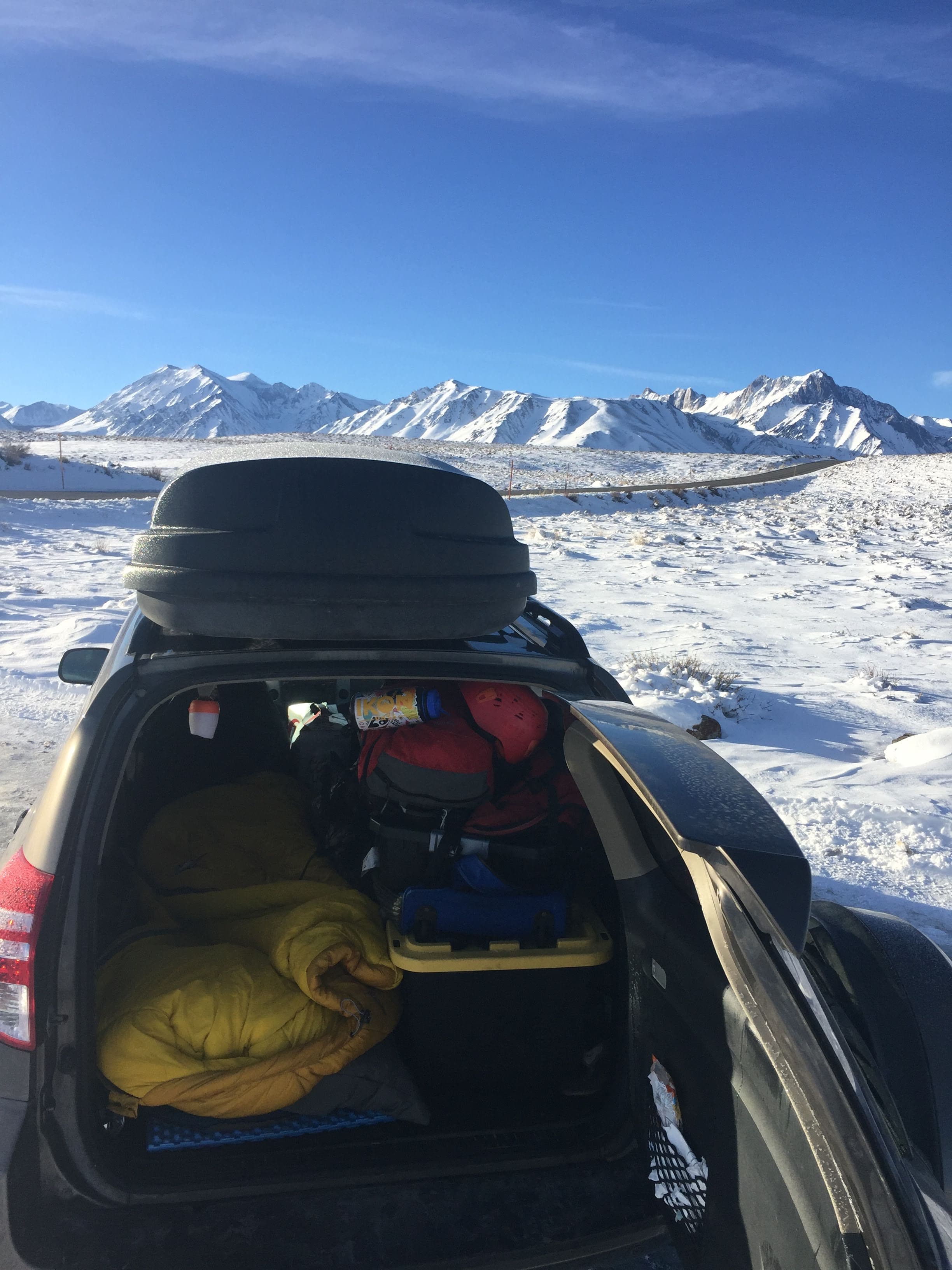
As graduation approached I desperately wanted a used Tacoma with a topper to build a little bed platform setup, but even used prices were just really high for my budget. I wound up buying a used RAV4 the week I graduated, and immediately threw a sleeping pad and a -15 degree winter sleeping bag in the back and did a two month road trip before I started my first job, traveling to Mexico to rock climb and all over the Rockies and Sierras to ski.
After this trip, I built a basic removable platform for the RAV4 and kept sketching plans for the next camper — truck campers, vans, sleeping platforms, whatever I thought I could afford.
Learning Lessons the Hard Way
A few years later, I moved to Colorado. In a very poorly planned series of events, I bought a $2,000 old Aliner camper trailer, and a $3,600 beater old Tundra, with the thought that I could use it for extended trips almost right away. It turned out that both were essentially totaled—the Aliner had massive water damage in the roof panels that hadn't been obvious to me, and the Tundra had all sorts of issues. It'd been a work truck and seems like it'd seen a lot of abuse.
I spent some time starting to fix up both, but eventually decided it just didn't make sense. Fortunately I'd bought them so cheap that even selling them as-is and declaring all the problems, I didn't lose too much money.
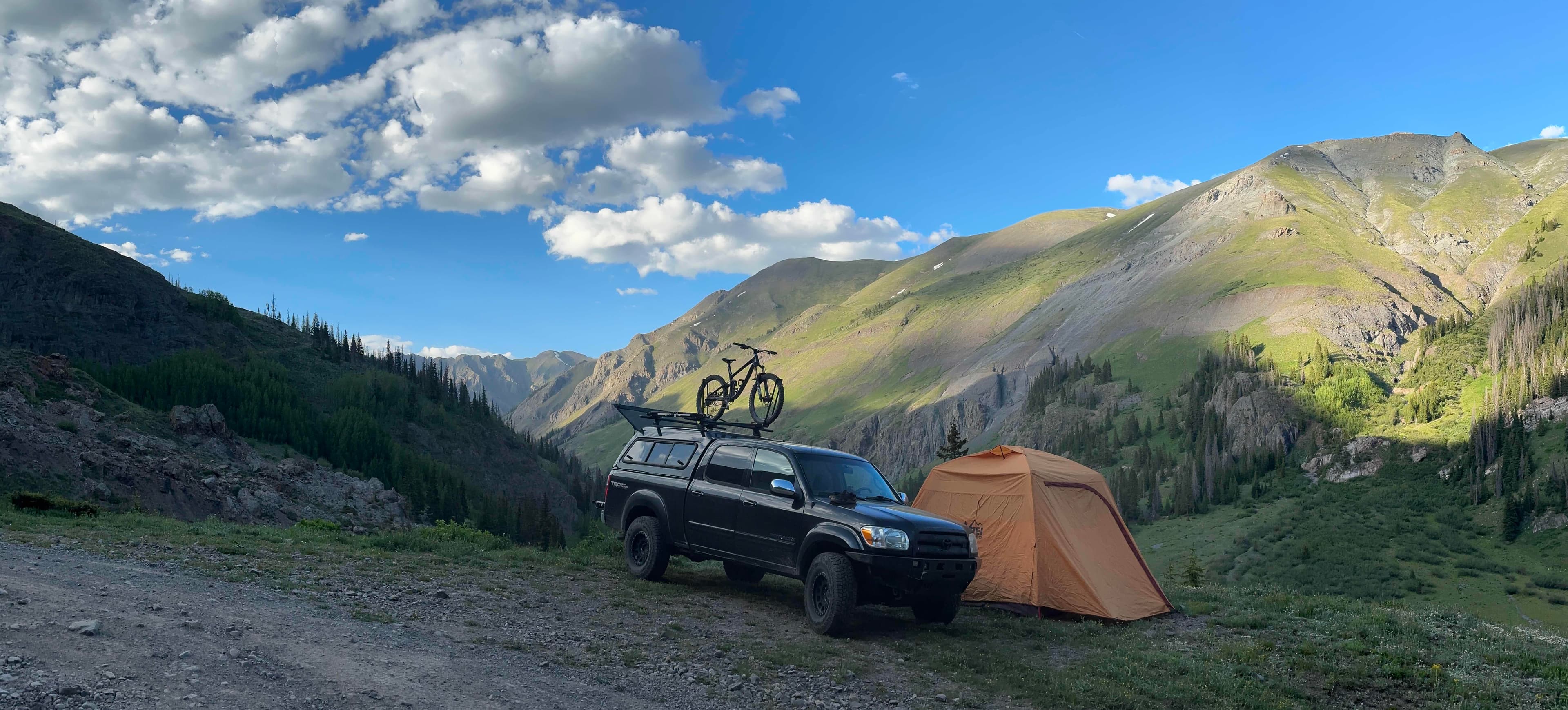
I then bought a 2006 Tundra, and built a different platform for it. I used it about the same way I'd used my RAV4 platform, but it was nice to have the extra space and ground clearance.
The First Real Build
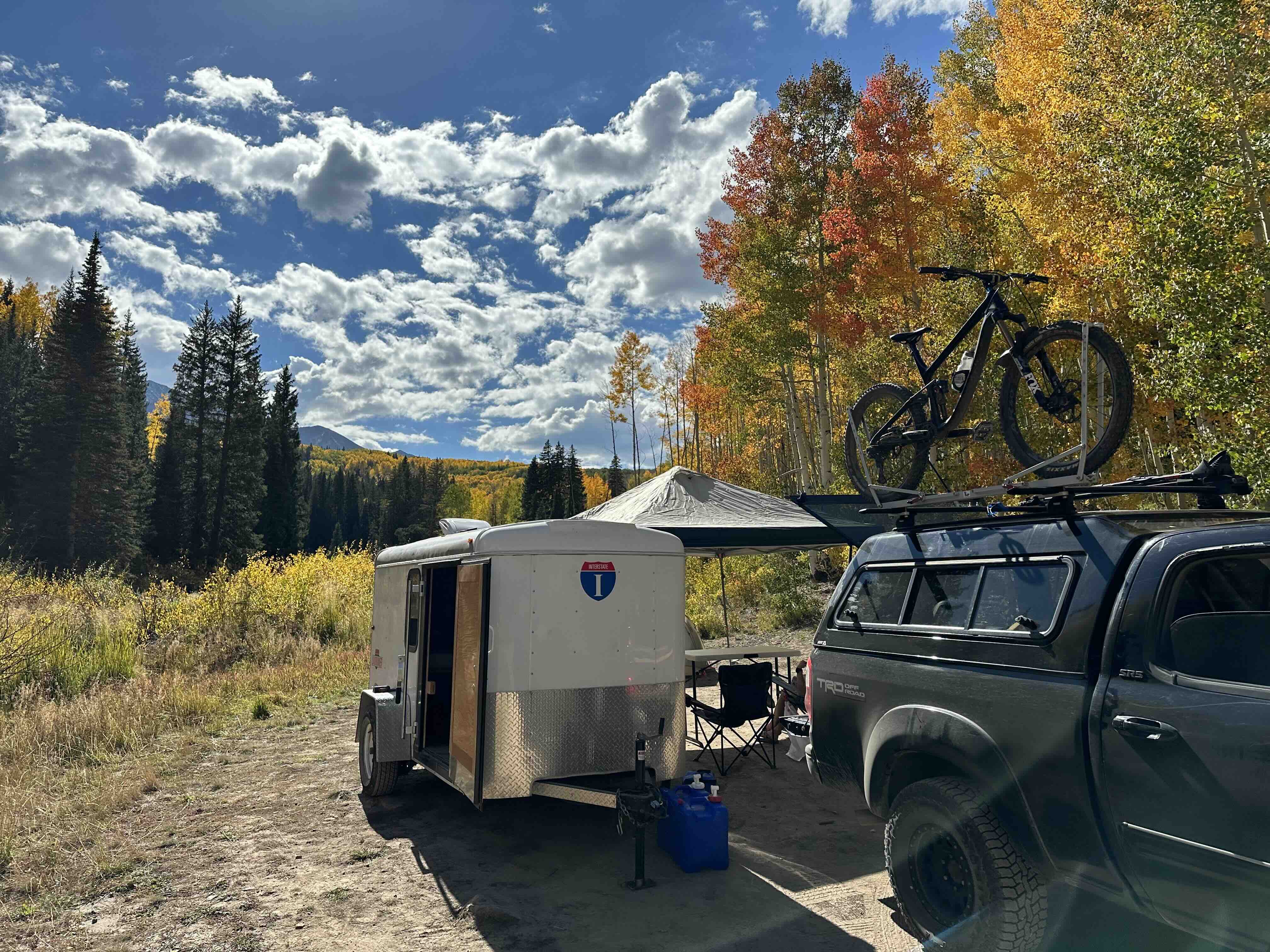
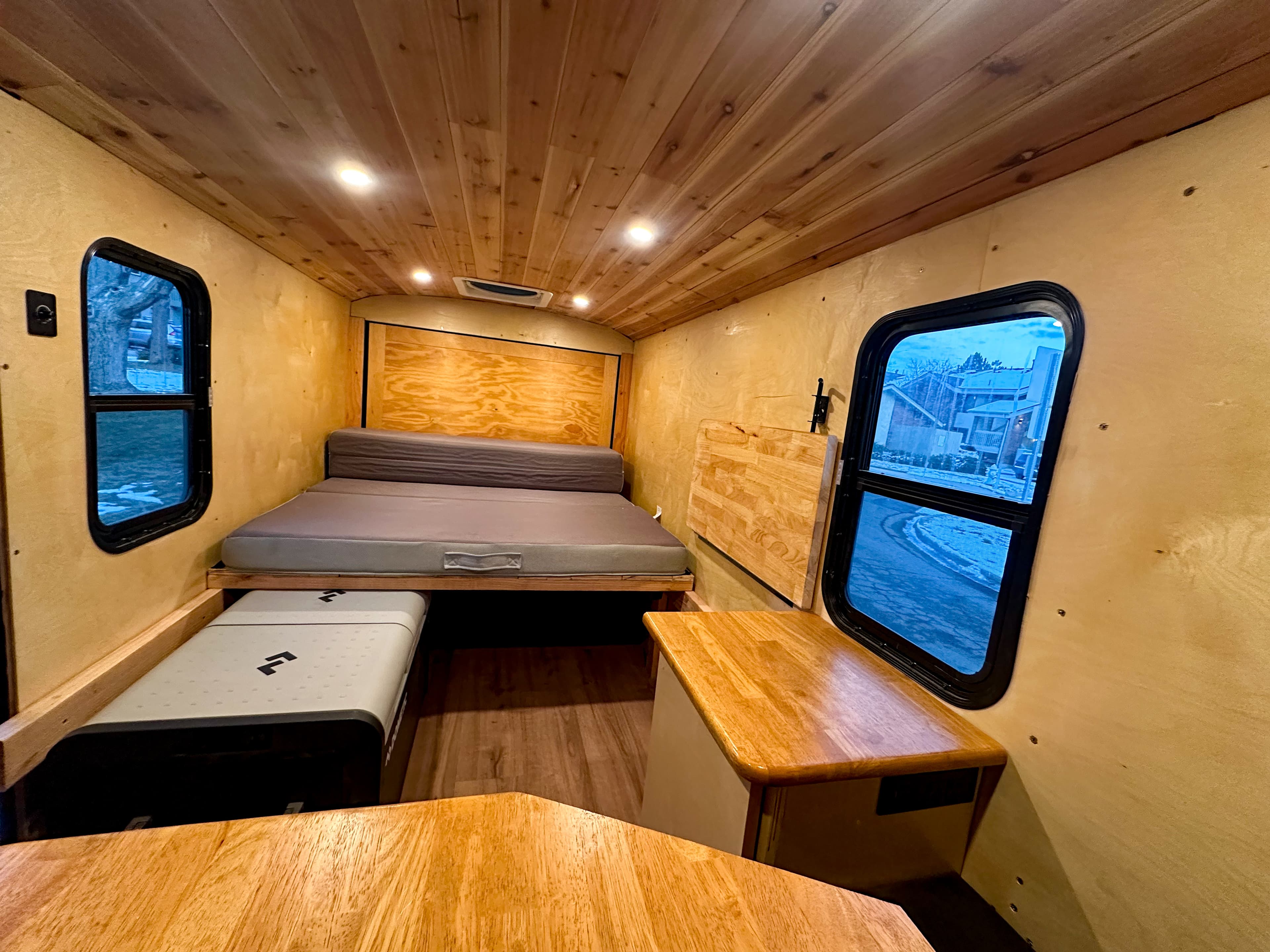
Then, we moved, and I finally had a small garage. I started to plan my first full camper build—a cargo trailer camper. I was obsessed, diving deep into solar setups, insulation, layouts, and more. I learned a lot from that build, and was quite happy with how it came out.
I got some great use out of it in the mountains of Colorado. However, almost as soon as it was done I got stir crazy without a project to work on. I also realized quickly that though it worked great in some ways, exploring down forest roads with a trailer could get messy quickly when you found dead ends.
The Van
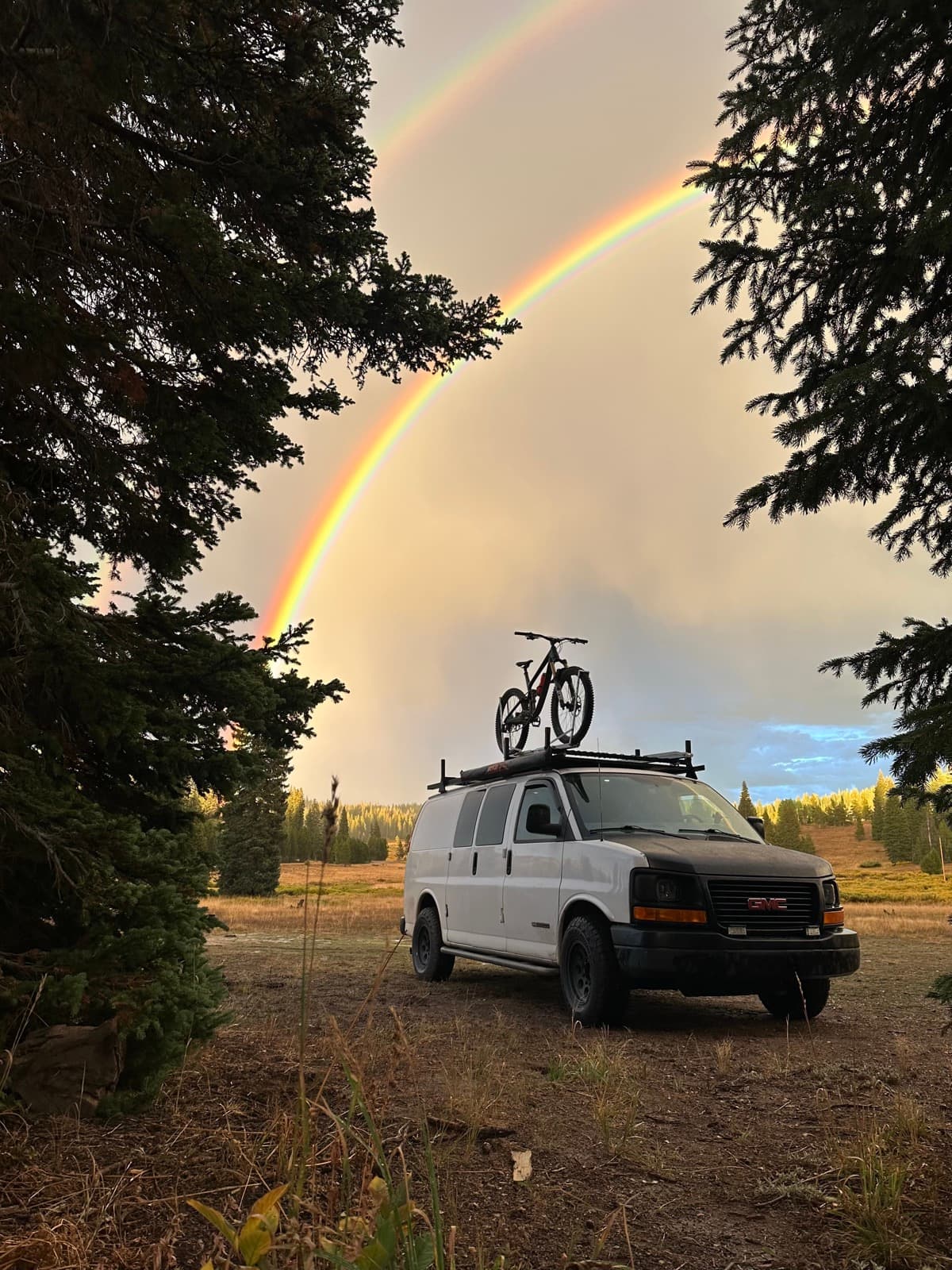
I'd never liked the idea of putting hundreds of hours and thousands of dollars into building out a used van that had a limited remaining life expectancy, and of not being able to transfer your build to a new van like you could with a truck camper. Used vans had also been super expensive for the few years after Covid hit.
However, I started to like the idea of building on an older Chevy/GMC Express. The platform is mechanically reliable, parts are everywhere, and used ones are still affordable. It seemed like it'd have enough room to be sort of comfortable for shorter to medium length trips, decent fuel economy, and it'd allow me to explore and not have to worry about hooking or unhooking a trailer myself or getting stuck on dead end roads.
I didn't want or need it to be Instagram-perfect, but wanted it to be designed in a way where I could work productively in my day job. I'd need plenty of power, a comfortable place to work, reasonably cool temperatures when it was hot, and heat when it was cold.
Helping Others
As I worked on the van, I had several other friends that were either updating vans they'd had for a long time, building new vans, or adding off-grid power to other kinds of campers. I realized a lot of them had no idea how much the options had changed in the last few years — one was stuck with a worn-out old battery in his van, thinking he couldn't afford a modern LiFePO4 replacement. Another frequently ran out of power in his truck camper, but didn't realize there were relatively affordable options to improve the charging capacity while driving, even without replacing his power station.
Two others, a couple, were so inspired by my low roof GMC build that they bought an identical van of their own and started a similar build.
Eventually, I decided that I liked the idea of putting together a comprehensive camper build guide on the lessons I'd learned, to shorten the learning curve for others.
Why This Guide Exists
After helping a few friends with their builds, I noticed the same questions, mistakes, and budget overruns kept coming up — usually traceable to unrealistic expectations.
This guide exists to share the lessons learned from multiple builds, multiple vehicle types, and watching others go through the process. It's honest about what works, what doesn't, and what you actually need versus what looks cool on Instagram.
My goal is simple: help you build something you'll actually use, without wasting time or money on things that don't matter.
I hope this is helpful to you!
Affiliate Disclosure
This site contains affiliate links. When you purchase through these links, we may earn a small commission at no extra cost to you. We only recommend products we've personally used or thoroughly researched. Our recommendations are based on genuine experience — we'll always tell you when a cheaper alternative works just as well.